Getting the perfect chewy texture in udon noodles isn’t just about boiling time; it’s about understanding the delicate balance between firmness and stretch. I’ve spent years perfecting my method, and it’s always a dance of timing, tasting, and adjusting. When you hit that sweet spot, every bite feels like a little bit of joy, with each noodle giving just the right amount of resistance and bounce.
This recipe is about more than just noodles and sauce—it’s about the tactile pleasure of hand-tossing everything together, feeling the sauce cling, and hearing that satisfying sizzle. It’s a quick, honest process that rewards you with a bowl full of umami-rich, well-balanced flavors. I love how this dish turns simple ingredients into something that feels both comforting and exciting, all while keeping it vegan and straightforward.
Focusing on how to achieve the perfect balance between a chewy noodle texture and a flavorful, umami-rich sauce, this recipe emphasizes the tactile pleasure of hand-tossing and the importance of timing in stir-frying.
The story behind this recipe
- This dish came together during a cold winter evening when I craved something warm and nourishing but wanted to keep it simple and honest. I remembered the first time I tried making udon at home, struggling to get that perfect chewy bite, and I realized it’s all about respecting the noodle’s texture and letting the sauce do the talking. Over time, I learned that a little misstep—overcooking or rushing—can turn that ideal chew into a soggy mess, so patience is key.
- The inspiration struck when I found a forgotten jar of miso in my fridge, which I decided to blend into a quick, savory sauce. That moment of improvisation turned into a beloved recipe I return to whenever I need a quick, satisfying meal. It’s a reminder that the best dishes often come from a bit of chaos and a lot of tasting along the way.
- heading
- story_type
Ingredient breakdown: key components
- Udon noodles: I prefer using fresh, thick udon for that chewy bite; frozen works too if you’re in a pinch, just give them a good rinse to remove excess starch.
- Soy sauce: I stick to a good-quality, naturally brewed soy sauce—it adds depth and a slightly smoky aroma that really elevates the dish; if you want less salt, dilute a bit or try coconut aminos.
- Miso paste: I love the umami richness it brings, especially when slightly warmed in the sauce; if you’re out, a splash of nutritional yeast can hint at that savory flavor.
- Sesame oil: I toast it lightly before adding for a nutty aroma that fills the kitchen; skip if you’re after a lighter finish, but it really adds warmth and complexity.
- Garlic & ginger: Fresh is best—crushed and minced until fragrant, then sautéed until golden; dried powders can work in a pinch but lack that punch of aroma and freshness.
- Vegetables (scallions, mushrooms, bok choy): I like a mix of texture—crisp scallions and tender greens; sauté lightly or toss raw for more crunch, depending on your mood.
- Oil (vegetable or grapeseed): I use a neutral oil that heats up fast and doesn’t overpower; just enough to get that sizzle when stir-frying, about 1-2 tbsp.
Spotlight on key ingredients
Miso paste:
- Udon noodles: I prefer using fresh, thick udon for that chewy bite; frozen works too if you’re in a pinch, just give them a good rinse to remove excess starch.
- Soy sauce: I stick to a good-quality, naturally brewed soy sauce—it adds depth and a slightly smoky aroma that really elevates the dish; if you want less salt, dilute a bit or try coconut aminos.
- I love the umami richness it brings, especially when slightly warmed in the sauce; if you’re out, a splash of nutritional yeast can hint at that savory flavor.
Sesame oil:
- I toast it lightly before adding for a nutty aroma that fills the kitchen; skip if you’re after a lighter finish, but it really adds warmth and complexity.
- Garlic & ginger: Fresh is best—crushed and minced until fragrant, then sautéed until golden; dried powders can work in a pinch but lack that punch of aroma and freshness.
Notes for ingredient swaps
- Fresh Udon Noodles: I love the chewiness of freshly made udon, but frozen noodles work fine if you rinse them well first. Just avoid overcooking.
- Soy Sauce: Use a naturally brewed soy for depth; coconut aminos are a good low-sodium alternative with a slightly sweeter, milder flavor.
- Miso Paste: If you’re out, nutritional yeast can add a savory note, but it won’t be as rich or salty. Consider a splash of tamari for umami.
- Sesame Oil: Toasted sesame oil adds a nutty aroma—skip if you want a lighter dish, but it’s worth the extra warmth. Try a drizzle of peanut oil for a different flair.
- Vegetables: Feel free to swap in wilted spinach or shredded carrots—whatever’s in the fridge, just keep the textures in mind. Crispy scallions add brightness.
- Oil for Stir-Frying: Grape seed or vegetable oil heats well without overpowering the dish. If you want richer flavor, try a splash of toasted sesame oil at the end.
- Additional Toppings: Consider adding chopped nori or a squeeze of lemon for an extra flavor punch—these little touches brighten the dish.
Equipment & Tools
- Large pot: Boil the noodles quickly and evenly.
- Wok or skillet: Stir-fry vegetables and noodles for even heat and tossing.
- Tongs or chopsticks: Mix and toss ingredients without breaking noodles.
- Small bowl: Mix and hold the sauce ingredients.
- Slotted spoon: Drain noodles efficiently without excess water.
Step-by-step guide to vegan udon
- Equipment & Tools: Gather a large pot for boiling, a wok or wide skillet for stir-frying, tongs or chopsticks for tosses, a small bowl for sauce, and a slotted spoon for draining.
- Boil water: Fill the pot with 4 liters (about 4 quarts) of water. Bring to a rolling boil at 100°C (212°F).
- Cook noodles: Add udon noodles. Stir gently to prevent sticking. Cook for 8-10 minutes, until just tender but still chewy. Drain and rinse under cold water to stop cooking and remove excess starch.
- Prepare sauce: In a small bowl, whisk together 3 tbsp soy sauce, 1 tbsp miso paste, 1 tsp sesame oil, 1 minced garlic clove, and 1 tsp grated ginger. Set aside.
- Stir-fry vegetables: Heat 1-2 tbsp vegetable oil in your wok over medium-high heat (around 180°C/356°F). Add sliced mushrooms and chopped bok choy. Cook for 3-4 minutes until fragrant and slightly tender. Add sliced scallions in the last minute for freshness.
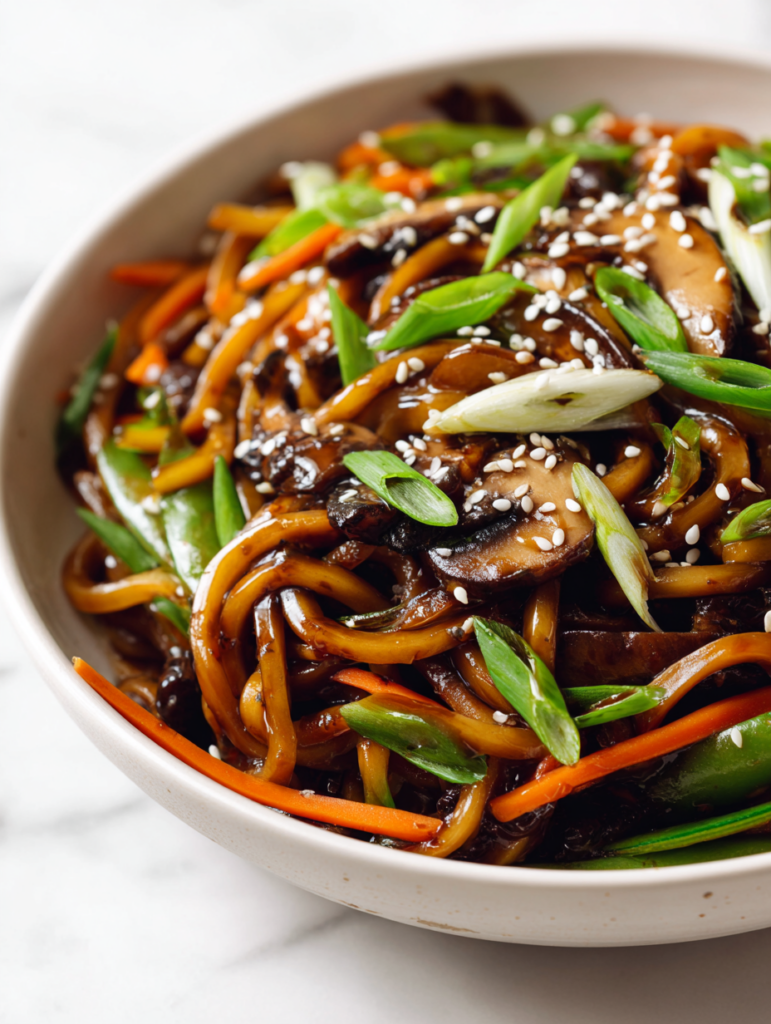
- Combine noodles and sauce: Add the drained udon to the wok with vegetables. Pour sauce over. Toss everything vigorously for 2-3 minutes, until noodles are evenly coated and heated through. The noodles should be glossy and slightly sticky.
- Final touch: Taste and adjust seasoning if needed, adding a splash more soy or sesame oil. Keep tossing until well combined.
- Finish and plate: Remove from heat. Rest for 1 minute to let flavors meld. Serve immediately, garnished with extra scallions or sesame seeds if desired.
Let the dish rest for a minute to let flavors settle. Serve immediately on warm plates, garnished with fresh scallions or sesame seeds for added aroma and texture.
How to Know It’s Done
- Noodles are chewy with a slight bounce when tested with tongs.
- Sauce is glossy and coats noodles evenly, with a fragrant aroma of garlic and ginger.
- Vegetables are tender but still hold some crunch, not soggy or limp.
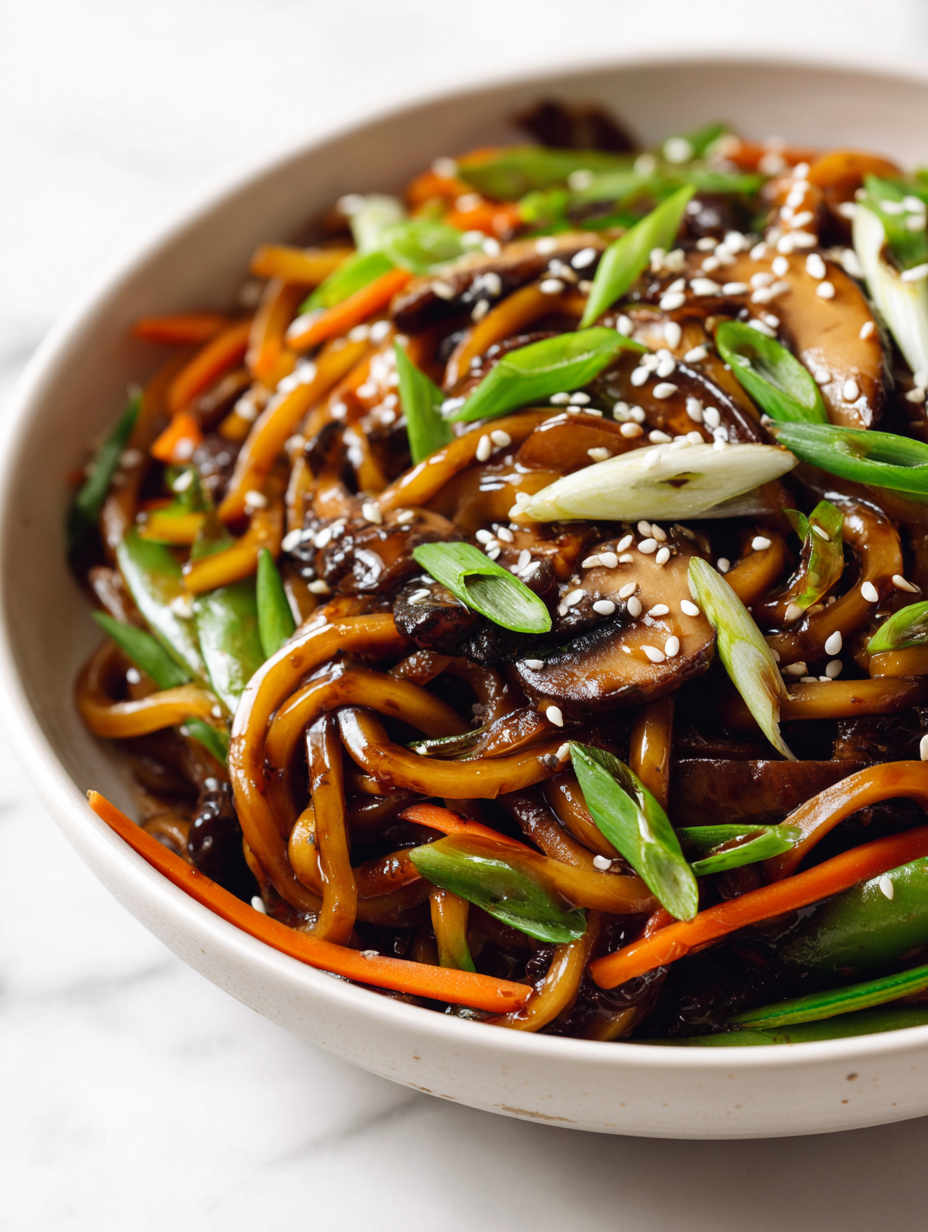
Vegan Udon Noodles in Umami Sauce
Ingredients
Equipment
Method
- Bring a large pot of water to a rolling boil. Add the udon noodles and stir gently to prevent sticking. Cook for 8-10 minutes until just tender and chewy. Drain and rinse under cold water to stop the cooking and set aside.
- In a small bowl, whisk together soy sauce, miso paste, sesame oil, minced garlic, and grated ginger until smooth. Set this flavorful sauce aside.
- Heat the vegetable oil in your wok or skillet over high heat until shimmering and hot. Add the mixed vegetables and stir-fry for about 3-4 minutes until fragrant and slightly tender, listening for a gentle sizzle.
- Add the drained udon noodles to the wok with the vegetables. Toss gently to combine the ingredients evenly, allowing the noodles to heat through and absorb the flavors.
- Pour the prepared sauce over the noodles and vegetables. Toss vigorously with tongs or chopsticks for 2-3 minutes until the noodles glisten with sauce and develop a slight sticky coating. You should hear a gentle sizzling as the sauce thickens.
- Taste the dish and adjust seasoning if needed—perhaps a splash more soy or sesame oil. Continue tossing for another minute to let flavors meld and the noodles become perfectly chewy and glossy.
- Remove the wok from heat, garnish with chopped scallions if desired, and serve immediately while hot and fragrant. Enjoy the satisfying chewiness and umami-rich flavors in every bite!
Pro tips for perfect vegan udon
- Use high heat for stir-frying to get a quick, smoky sear and vibrant flavors.
- Toss the noodles immediately after adding sauce to prevent sticking and ensure even coating.
- Toast sesame oil lightly before drizzling for a deeper, nutty aroma that fills the kitchen.
- Rinse fresh udon noodles under cold water after boiling to stop cooking and keep them chewy.
- Keep ingredients moving in the pan to avoid burning or overcooking delicate vegetables.
- Taste the sauce before adding salt—soy and miso are salty, so adjust cautiously.
- Rest the finished dish for a minute before serving to let flavors meld and noodles set.
Common mistakes and how to fix them
- FORGOT to drain noodles thoroughly → Rinse well to remove excess starch and prevent clumping.
- DUMPED sauce ingredients into hot pan → Add sauce gradually, tasting as you go for balance.
- OVER-TORCHED vegetables → Stir constantly, lower heat if veggies start to burn or char excessively.
- MISSED the noodle texture check → Noodles should be chewy with a slight bounce; test with tongs or chopsticks.
Quick fixes and pantry swaps
- If noodles stick, splash in a little more hot water and toss vigorously.
- When sauce is too salty, add a squeeze of lemon or a splash of rice vinegar.
- DUMPED too much oil? Pat noodles dry briefly with a paper towel to absorb excess.
- Overcooked vegetables? Patch with a quick splash of soy sauce and stir-fry briefly again.
- When sauce looks dull, shimmer it with a few drops of toasted sesame oil to revive aroma.
Prep, store, and reheat tips
- Cook the udon noodles ahead of time, rinse thoroughly, and store in an airtight container in the fridge for up to 2 days. The noodles will absorb flavors and may become slightly firmer, so toss them in a little sesame oil to keep them from sticking.
- Prepare the sauce mixture in advance—combine soy, miso, garlic, and ginger in a jar. Keep refrigerated for up to 3 days. The flavors will deepen as they sit, making it even more umami-rich.
- Chop vegetables and scallions ahead, storing them in separate containers in the fridge for up to 2 days. They’ll stay crisp if kept dry and covered, but for maximum freshness, add them just before stir-frying.
- Reheat the noodles gently in a skillet over medium heat, adding a splash of water or broth to loosen them. They’ll take about 2-3 minutes and should smell fragrant, with a slight bounce when stirred. Avoid microwaving directly, as it can make noodles rubbery.
- For longer storage, you can freeze the cooked noodles in an airtight container for up to a month. Thaw in the fridge overnight, then reheat as above, expecting a slightly softer texture but still flavorful.
Top questions about vegan udon noodles
1. How do I keep udon chewy?
Use fresh or frozen udon; rinse under cold water after boiling to keep that chewy texture and prevent sticking.
2. How can I make the sauce less salty?
A splash of soy and miso creates a salty, umami-rich sauce; adjust to taste to avoid over-salting.
3. How do I prevent vegetables from overcooking?
Cook vegetables until just tender, aiming for a slight crunch; overcooking makes them mushy and dulls flavor.
4. What heat should I stir-fry at?
Use high heat (around 180°C/356°F) for stir-frying; it quickens cooking and brings out smoky aromas without burning.
5. Can I prepare noodles in advance?
Drain noodles thoroughly and toss with a little sesame oil if prepping ahead, to maintain texture and prevent clumping.
6. How do I fix a too-thin sauce?
If the sauce is too thin, simmer it for a minute or two to thicken; if too thick, add a splash of water or broth.
7. When should I add toppings?
Add chopped scallions or sesame seeds just before serving for freshness and crunch; they brighten the dish instantly.
8. What equipment is best for stir-frying?
Use a wide wok or skillet for even heat distribution and easy tossing; a non-stick helps prevent sticking.
9. How do I reheat leftovers without losing texture?
Reheat gently in a skillet over medium heat, adding a splash of water to revive chewy noodles and aroma.
10. Can I customize the vegetables?
Feel free to swap vegetables based on what’s in your fridge—carrots, spinach, or shredded cabbage work well.
This dish feels like a little act of rebellion—simple, honest, and packed with flavor. It’s perfect for when you want something quick but satisfying, with textures that keep your fork busy and aromas that linger well after the last bite.
In a world of fast food and takeout, this makes-me-happy bowl reminds me to slow down, taste carefully, and appreciate the small, savory moments. It’s a reminder that good food doesn’t need fuss, just a little love and a handful of honest ingredients.