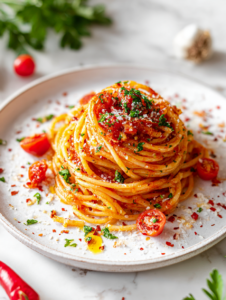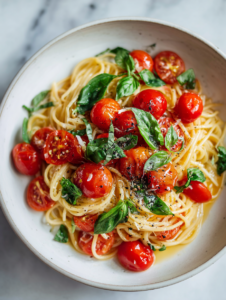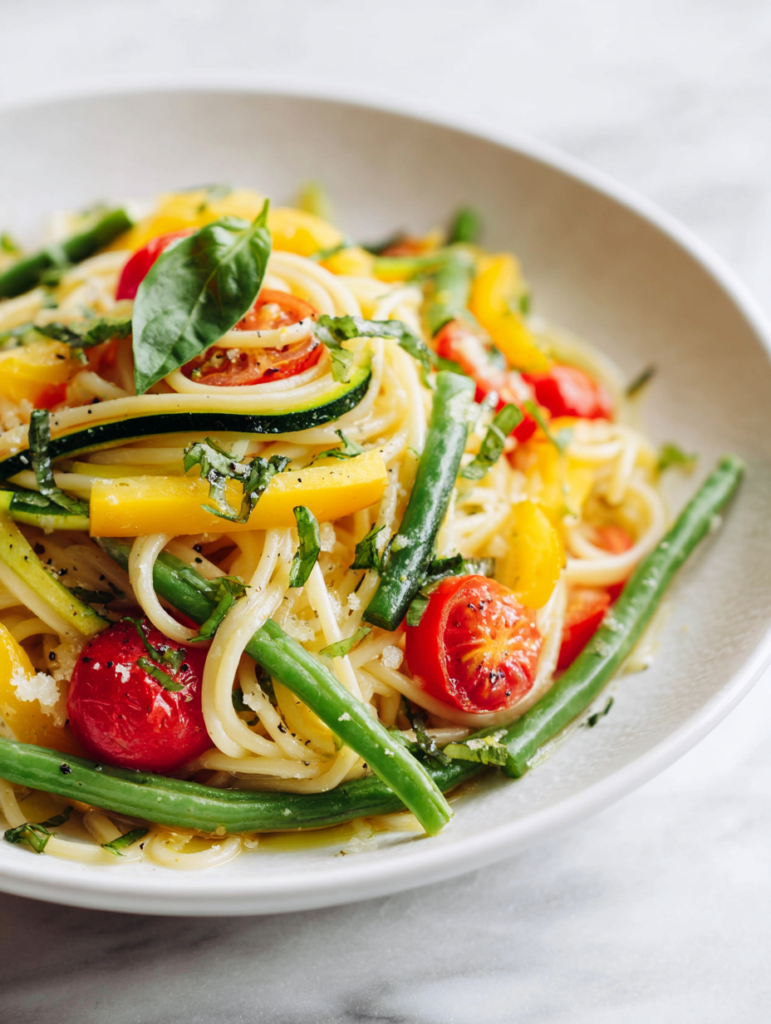
This Vegan Pasta Primavera is my go-to when I want something lively and fresh, especially after a day spent staring at a cluttered fridge. It’s about making use of whatever colorful veggies I’ve got lying around—no fuss, no strict rules, just a celebration of seasonal produce that turns into a satisfying meal.
I love how this dish transforms a simple weeknight dinner into a little ritual of quick chopping and tossing. It’s honest cooking, really. Nothing fancy, just good ingredients that speak for themselves, brightened by a splash of lemon and a handful of herbs. It’s the kind of meal that reminds me to slow down and enjoy what’s in front of me.
Focusing on how this dish turns a busy weeknight into a celebration of fresh, seasonal produce, emphasizing the importance of using what’s in your fridge rather than sticking rigidly to a recipe.
The story behind this recipe
- This dish came about one summer when I was overwhelmed by the abundance of fresh vegetables from my garden. I wanted to create something that showcased their natural sweetness without overwhelming it with heavy sauces or cheese. The idea of a simple, vibrant pasta dish that celebrates the season stuck with me.
- I remember the first time I threw together this recipe—chopping zucchini, bell peppers, and cherry tomatoes while the pasta cooked. The smell of garlic and lemon filling the kitchen made everything feel right. It’s become a go-to for busy nights, when I want something nourishing and bright, without fuss.
- Over the years, I’ve tweaked the ingredients based on what I have in the fridge, making it flexible yet consistently fresh. It’s a reminder that even a simple meal can carry a lot of personal memories and a sense of connection to the seasons.
Ingredient breakdown: key components
- Zucchini: I love how zucchini releases a gentle, grassy aroma when sautéed, adding a fresh bite. You can swap it for yellow squash if you prefer a milder flavor.
- Cherry Tomatoes: Their juicy burst makes every bite lively and tangy, especially when warmed through. If out of season, canned diced tomatoes work, but skip the extra splash of olive oil.
- Bell Peppers: I find their sweet, smoky crunch really lifts the dish. Use any color you like, or roasted red peppers for a more intense, smoky flavor.
- Garlic: It’s the backbone, giving that warm, pungent aroma that fills the kitchen. Crush it fresh for more punch, or use pre-minced if pressed for time.
- Lemon: Brightens everything with its zingy, citrusy glow—crack open a fresh lemon for best zest and juice. Lime can be a decent substitute in a pinch.
- Olive Oil: A good splash adds richness and helps veggies caramelize beautifully. If you prefer, try a nutty sesame oil for a different aroma profile.
- Fresh Herbs (basil, parsley): These herbs add a fragrant, slightly peppery note that makes the dish feel vibrant. Dried herbs can work, but use half the amount to avoid overpowering.
Spotlight on key ingredients
Zucchini, Cherry Tomatoes, Bell Peppers:
- Zucchini: I love how zucchini releases a gentle, grassy aroma when sautéed, adding a fresh bite. You can swap it for yellow squash if you prefer a milder flavor.
- Cherry Tomatoes: Their juicy burst makes every bite lively and tangy, especially when warmed through. If out of season, canned diced tomatoes work, but skip the extra splash of olive oil.
- Bell Peppers: I find their sweet, smoky crunch really lifts the dish. Use any color you like, or roasted red peppers for a more intense, smoky flavor.
Notes for ingredient swaps
- Dairy-Free: Use coconut cream or cashew cheese instead of traditional cheese. Expect a richer, slightly sweeter flavor and creamier texture.
- Gluten-Free: Swap regular pasta for gluten-free pasta made from rice, chickpeas, or lentils. It cooks similarly but may have a different bite.
- Oil Alternatives: Try avocado oil or toasted sesame oil for a different aroma. They add unique flavors but can be more pungent.
- Veggie Variations: If peppers aren’t available, roasted eggplant or zucchini work well. They absorb flavors and add soft, smoky notes.
- Herb Substitutes: Instead of basil or parsley, use cilantro or dill for a different herbal profile—more pungent or brighter, respectively.
Equipment & Tools
- Large pot: Boil pasta efficiently and evenly
- Wide skillet: Sauté vegetables and toss pasta easily
- Wooden spoon: Stir ingredients without scratching cookware
Step-by-step guide to vegan pasta primavera
- Gather all your equipment: a large pot for boiling pasta, a wide skillet for sautéing, and a wooden spoon for stirring. Have your ingredients prepped: chopped veggies, minced garlic, and herbs ready to go.
- Bring a large pot of salted water to a rolling boil—about 100°C / 212°F. Add your pasta (about 400g/14oz) and cook until just al dente, roughly 8-10 minutes. Test a strand—should have a slight bite, not mushy.
- While pasta cooks, heat 2 tablespoons olive oil in the skillet over medium heat (around 160°C/320°F). Toss in minced garlic and cook for 30 seconds until fragrant, then add your harder veggies like bell peppers and zucchini.
- Sauté for about 5 minutes, stirring often, until veggies are tender but still have a slight crunch. The aroma should be bright and slightly smoky. If veggies start to brown too fast, lower heat slightly and add a splash of water.
- Add cherry tomatoes in the last 2 minutes of sautéing—just enough to warm them through without bursting. Watch for a juicy, vibrant burst of color and aroma. If tomatoes seem to be shriveling too much, lower the heat or add a splash of broth.
- Drain pasta, reserving a cup of pasta water. Toss the pasta into the skillet with the veggies. Add lemon zest and juice, stir well to coat everything evenly. If the mixture feels dry, loosen with a splash of reserved pasta water until glossy and bright.
- Finish with chopped fresh herbs, a pinch of salt, and freshly cracked black pepper. Give it a final toss—smell and look for a lively, herbaceous aroma and a shiny, colorful appearance.
- Rest for 2 minutes off the heat. Plate the pasta primavera, drizzling with a little more olive oil if desired. Serve immediately—note the vibrant colors and fresh, fragrant aroma.
Rest the pasta for a couple of minutes off the heat to allow flavors to meld. Finish with herbs and a drizzle of oil. Serve hot, garnished with extra fresh herbs if desired.
How to Know It’s Done
- Pasta is al dente, with a slight bounce when bitten.
- Veggies are tender but not mushy, with vibrant colors and fragrant aroma.
- Sauce is glossy, coats the pasta evenly, with a bright, citrusy scent.
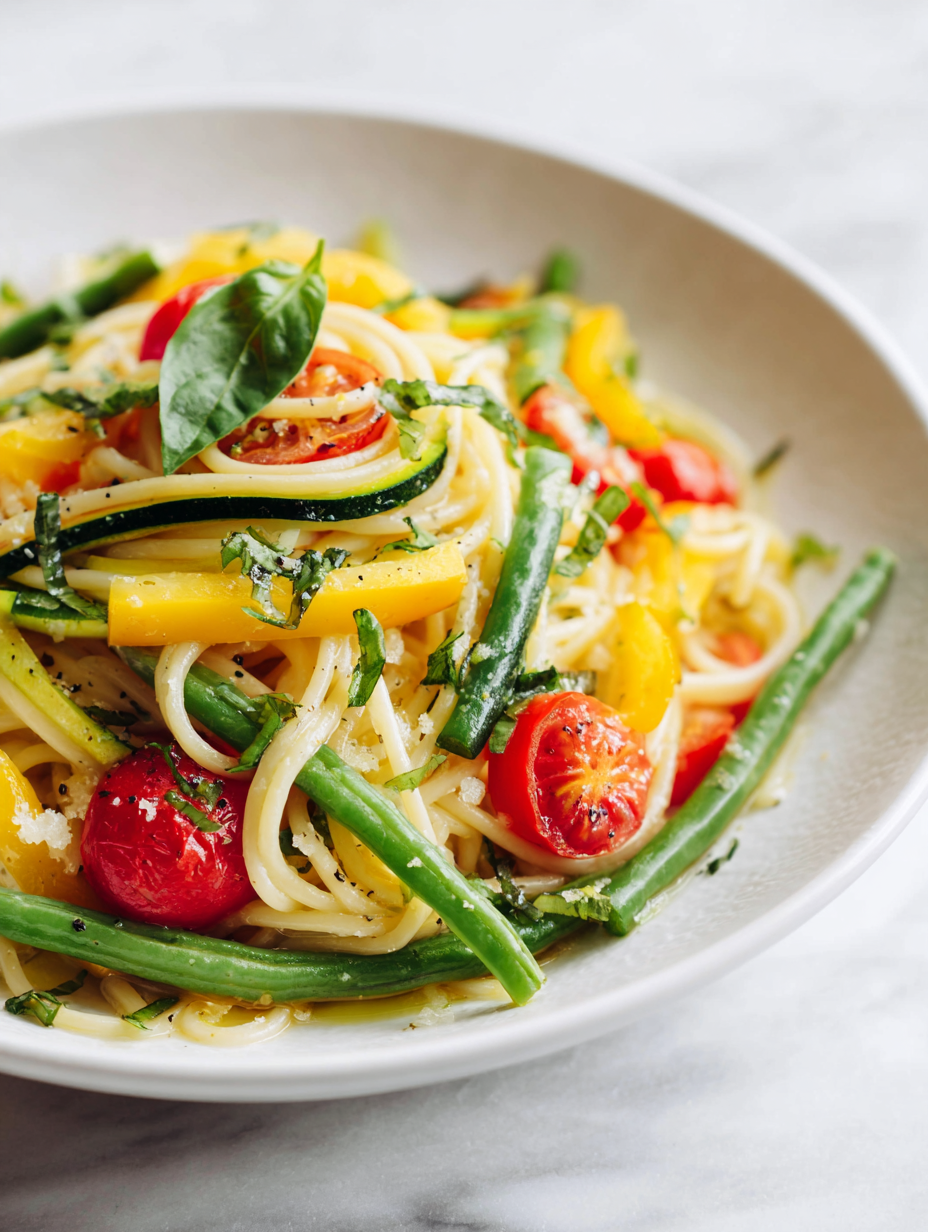
Vegan Pasta Primavera
Ingredients
Equipment
Method
- Bring a large pot of salted water to a rolling boil, then add your pasta and cook until just al dente, about 8-10 minutes. Drain and set aside.
- While the pasta cooks, heat olive oil in a wide skillet over medium heat. Add minced garlic and sauté for about 30 seconds until fragrant, releasing a warm aroma.
- Add sliced zucchini and bell peppers to the skillet. Stir frequently and cook for about 5 minutes until the vegetables are tender but still vibrant and slightly crisp.
- Stir in the halved cherry tomatoes and cook for another 2 minutes until they just start to soften and release their juices, filling the skillet with a juicy aroma.
- Drain the cooked pasta, reserving a splash of the pasta water. Add the pasta directly into the skillet with the vegetables and toss to combine.
- Sprinkle lemon zest over the mixture and squeeze in the lemon juice. Toss everything well to coat the pasta evenly, adding a splash of reserved pasta water if needed to loosen the sauce and make it glossy.
- Finish by stirring in chopped fresh herbs, then season with salt and pepper to taste. The dish should be bright, fragrant, and colorful, with a slight sheen from the olive oil and lemon juice.
- Serve immediately, garnished with extra herbs if desired. Enjoy your vibrant, fresh Vegan Pasta Primavera!
Pro tips for perfect Primavera
- Use high heat: Sauté vegetables quickly over medium-high heat for vibrant color and caramelized edges.
- Resist crowding: Cook veggies in batches if needed; overcrowding causes steaming instead of sautéing, dulling flavors.
- Add salt early: Salt veggies during cooking to enhance their natural sweetness and improve texture.
- Finish with lemon: Squeeze fresh lemon juice at the end for a bright, zesty punch that elevates the dish.
- Reserve pasta water: Keep a splash of pasta water to adjust sauce consistency and add a subtle starchy richness.
- Herb timing: Add fresh herbs at the very end to preserve their bright aroma and flavor.
- Taste as you go: Always sample and adjust seasoning—salty, bright, or savory—before serving.
Common mistakes and how to fix them
- FORGOT to check pasta for al dente; overcooking makes it mushy and dulls flavor.
- DUMPED all veggies in at once; sauté in stages for better texture and caramelization.
- OVER-TORCHED garlic; lower heat and stir constantly to prevent bitterness and burning.
- MISSED reserving pasta water; use it to loosen sauce and enhance flavor and shine.
Quick fixes and pantry swaps
- When sauce is too thick, splash in hot pasta water to loosen and shimmer.
- If veggies release too much water, increase heat for quick evaporation and caramelization.
- Splash a bit of soy sauce or miso for umami if you’re missing herbs or seasoning.
- Patch over undercooked pasta with a quick toss in boiling water—rescue in 5 seconds.
- Shield delicate cherry tomatoes from overcooking by adding last minute for a fresh burst.
Prep, store, and reheat tips
- Chop all vegetables in advance; store in airtight containers in the fridge for up to 2 days. Freshly cut veggies retain their crispness and aroma best within the first day.
- Cook pasta ahead and keep it refrigerated for up to 24 hours. Toss with a little olive oil to prevent sticking and keep the texture firm. Reheat briefly in boiling water or microwave, adding a splash of water to revive moisture.
- Prepare and mix the lemon and herb dressing ahead; store in a small jar in the fridge for up to 2 days. Bright flavors may mellow slightly after refrigeration, so taste and adjust before serving.
- Keep sautéed veggies in an airtight container for up to one day. Reheat in a skillet over medium heat, stirring until fragrant and heated through—look for vibrant color and fragrant aroma.
- The assembled dish is best enjoyed fresh, but leftovers can be stored for up to 24 hours. Reheat gently and add a squeeze of lemon or fresh herbs to brighten the flavors again.
Top questions about Vegan Pasta Primavera
1. Can I use less oil or skip it altogether?
Use a flavorful olive oil and fresh herbs; they really make the dish pop with brightness and aroma.
2. What are good vegetable substitutions?
Yes, zucchini and yellow squash are great swaps; they soften nicely and add a mild sweetness.
3. How do I know when the pasta is done?
Cook pasta just until al dente, around 8-10 minutes, then taste to check firmness and flavor.
4. When should I add the lemon?
Add lemon juice at the end to preserve its bright, zingy flavor; too early and it can turn dull.
5. Can I prepare herbs in advance?
Stir in fresh herbs last to keep their vibrant aroma and flavor intact.
6. Can I use canned tomatoes?
Use canned diced tomatoes if fresh aren’t available; they’re juicier and add instant brightness.
7. Why should I save pasta water?
Reserving some pasta water helps loosen the sauce and adds a glossy, starchy finish.
8. Why aren’t my veggies browning?
Overcrowding the pan causes steaming, so cook veggies in batches for the best caramelization.
9. How long can I store leftovers?
Leftovers keep well in the fridge for up to a day; reheat gently to preserve texture and flavor.
10. My Primavera looks dull—what can I do?
If the dish seems dry, splash in reserved pasta water or a little vegetable broth to refresh it.
This pasta dish is a reminder that simple, seasonal ingredients can come together into something lively and satisfying. It’s perfect for those nights when you want to keep things honest and fresh, without extra fuss or complexity.
In the end, it’s about the smell of garlic and lemon, the crunch of peppers, and the bright burst of herbs that make this meal feel special. It’s a little act of mindful cooking, right in the middle of a busy week, that leaves you feeling nourished and a bit more connected to what’s in your fridge.