There’s something about a simple pasta dinner that stirs up childhood memories—those nights when the kitchen was filled with the smell of bubbling tomato sauce and the promise of comfort. I wanted to create a version that keeps that nostalgic warmth but adds a modern twist with creamy, plant-based richness that surprises you.
This vegan creamy tomato pasta isn’t just about replacing dairy; it’s about layering flavors that make each bite feel indulgent yet honest. It’s perfect for those evenings when you crave something familiar but with enough depth to keep you coming back for more. Plus, it’s so straightforward, it almost makes itself—perfect for busy nights or lazy weekends.
Focusing on the comforting nostalgia of childhood pasta nights, but updating it with rich, plant-based creaminess that surprises and satisfies.
The story behind this recipe
- This recipe came together late one rainy evening when I had almost no dairy left but craved something rich and comforting. I remembered a small café in Italy where I had a surprisingly creamy tomato pasta that used cashews and a splash of lemon for brightness. I wanted to recreate that velvety sauce with my own plant-based twist, leaning into the idea that simplicity and a handful of good ingredients can transform a humble bowl into something memorable.
- I started experimenting with different nuts, and oils, and balancing acidity until it felt just right—bright, smooth, and deeply satisfying. The process reminded me how sometimes, the best dishes are born out of improvisation and a little bit of chaos in the kitchen. It’s become a go-to when I need comfort but want to keep it clean and kind to the planet.
- heading
- The story behind this recipe
Ingredient breakdown
- Tomatoes: I use ripe, heirloom tomatoes for a naturally sweet and tangy base—look for deep red, juicy ones that smell like summer. Skip if they’re bland; a good tomato makes all the difference.
- Cashews: Soaked and blended into creaminess, they give the sauce a silky texture that feels indulgent. If you’re nut-free, try soaked cauliflower—less rich, but still smooth and neutral.
- Garlic: I love a generous clove for that pungent, warming aroma that fills the kitchen. Fry it until golden, but be careful not to burn—bitter bits ruin the vibe.
- Onion: Adds depth and sweetness—use yellow or sweet onions. Sauté until translucent; if they turn brown too quickly, lower the heat or add a splash of water to soften.
- Olive oil: Drizzle good-quality extra virgin for richness. It’s the backbone of the sauce—don’t skimp, but skip anything too bitter or old. The smell should be grassy and fresh.
- Plant-based cream: I prefer coconut or cashew cream for that lush, velvety finish. If you want lighter, try oat cream—still creamy but with a mild, oat-y sweetness.
- Basil: Fresh basil brightens everything with its sweet, peppery aroma. Add it at the end to keep that fresh, vibrant punch—if you’re out, a pinch of oregano works in a pinch.
Spotlight on key ingredients
Tomatoes:
- I use ripe, heirloom tomatoes for a naturally sweet and tangy base—look for deep red, juicy ones that smell like summer. Skip if they’re bland; a good tomato makes all the difference.
- Cashews: Soaked and blended into creaminess, they give the sauce a silky texture that feels indulgent. If you’re nut-free, try soaked cauliflower—less rich, but still smooth and neutral.
Cashews:
- Soaked and blended into creaminess, they give the sauce a silky texture that feels indulgent. If you’re nut-free, try soaked cauliflower—less rich, but still smooth and neutral.
- ingredient
- Cashews
Notes for ingredient swaps
- Dairy-Free: Coconut or cashew cream can replace traditional cream. Expect a slightly sweeter, richer flavor, but still velvety.
- Tomatoes: Use fire-roasted or sundried for smoky depth. Fresh heirlooms bring brightness, but canned good quality tomatoes work in a pinch.
- Nuts: Sunflower seeds or soaked cauliflower can substitute cashews if nut allergies are an issue. They’ll change the creaminess slightly but keep it smooth.
- Oil: Avocado oil or light sesame oil can swap olive oil. They add different flavor nuances—nutty or toasted—but still work as a cooking fat.
- Herbs: Fresh basil is key, but oregano or parsley can add a different, herbaceous note if basil’s unavailable. Don’t skip the fresh element if you can.
Equipment & Tools
- Large skillet: For sautéing onions, garlic, and simmering the sauce evenly.
- Blender: To create a smooth, creamy cashew sauce base.
- Wooden spoon: For stirring without scratching non-stick surfaces and controlling heat.
- Pot for pasta: To cook pasta to perfect al dente texture.
- Measuring cups and spoons: To measure ingredients precisely, ensuring balance.
Step-by-step guide to creamy tomato pasta
- Equipment & Tools: Gather a large skillet (about 30cm/12in) for even heat distribution, a blender for smooth sauce, and a wooden spoon for stirring.
- Start by heating 2 tbsp olive oil over medium heat (about 160°C/320°F). Add 1 diced onion and cook until translucent, about 5 minutes. Stir frequently to prevent sticking.
- Add 3 minced garlic cloves; sauté for 30 seconds until fragrant and golden. If garlic burns, lower the heat to prevent bitterness.
- Stir in 4 cups chopped ripe tomatoes; cook until they break down and release their juices, about 10 minutes. Smash some with the back of your spoon for a thicker sauce. Adjust heat if bubbling too aggressively.
- While the tomato mixture simmers, soak 1/2 cup cashews in hot water for 15 minutes, then drain. Transfer to blender with 1/2 cup water, a squeeze of lemon, and a pinch of salt. Blend until ultra-smooth, about 1 minute. Check for creaminess; if too thick, add more water gradually.
- Pour the cashew cream into the simmering tomato sauce. Stir well to combine. Let simmer gently for another 5 minutes, stirring occasionally. The sauce should turn velvety and oozy, with a bright aroma of garlic and tomato.
- Meanwhile, cook 300g (about 10 oz) of pasta in salted boiling water (about 2 liters/half gallon, 100°C/212°F). Cook until al dente, about 8-10 minutes. Reserve 1/2 cup pasta water before draining.
- Drain pasta and add directly to the sauce. Toss to coat evenly, adding a splash of reserved pasta water if the sauce feels thick or clumpy. Cook together for 1-2 minutes to meld flavors.
- Remove from heat and stir in chopped fresh basil. Taste and adjust seasoning with salt or a squeeze more lemon for brightness.
- Rest the pasta for 2 minutes off heat. Plate generously, garnish with additional basil if desired, and serve hot.
Let the pasta rest for 2 minutes off the stove, allowing flavors to meld. Serve immediately, garnished with fresh basil or a drizzle of olive oil for extra shine and aroma.
How to Know It’s Done
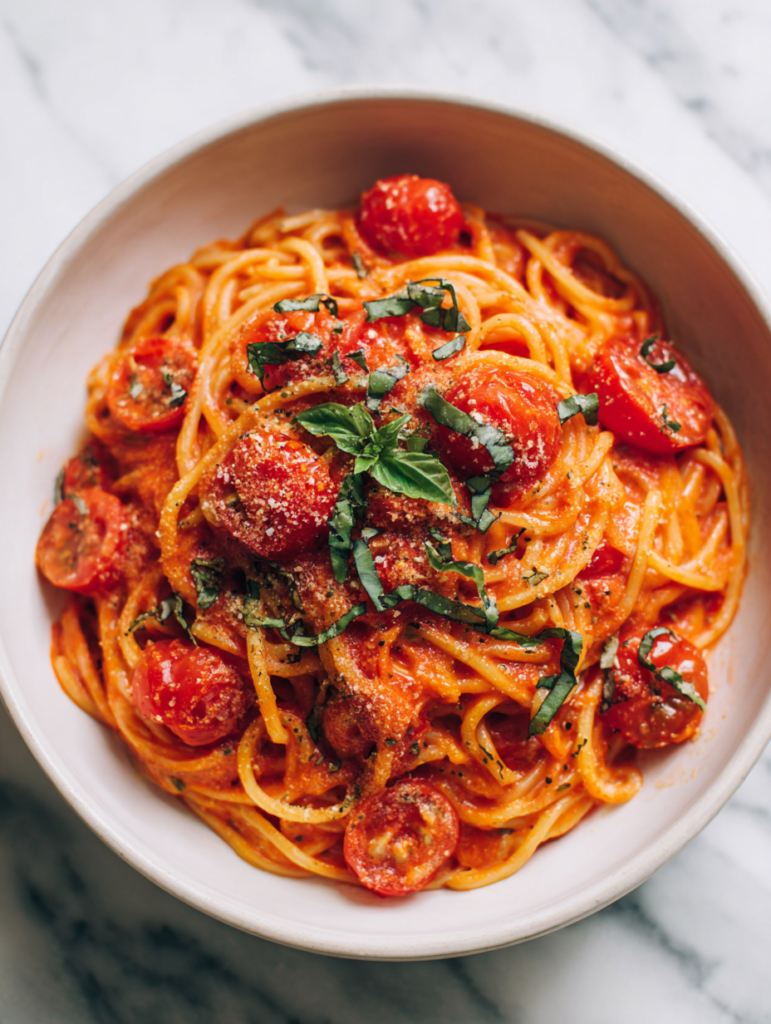
- Sauce is velvety and coats the pasta evenly, with a bright tomato aroma.
- Tomatoes are broken down, glossy, and slightly thickened, not watery.
- Pasta is cooked al dente, with a slight chew, and well coated with sauce.
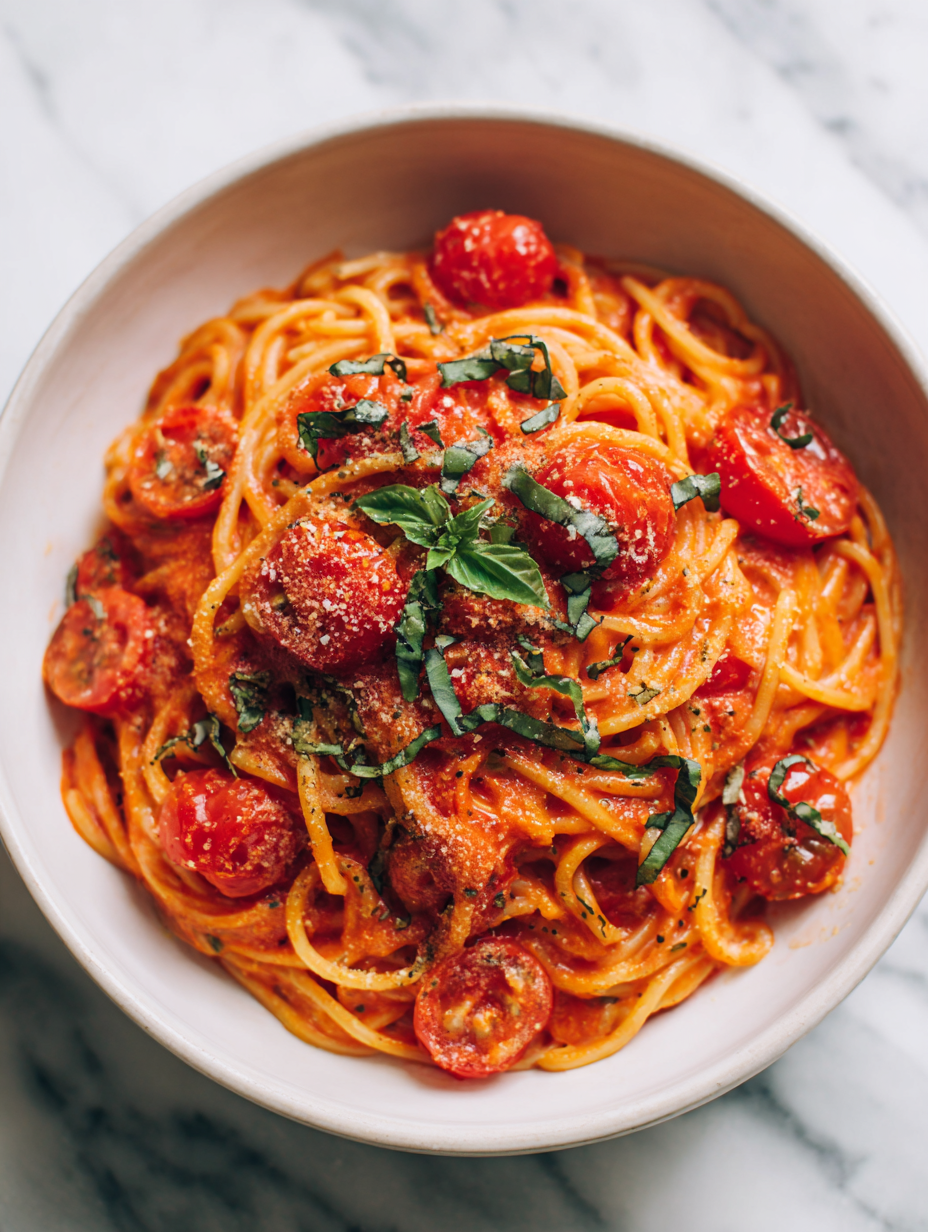
Vegan Creamy Tomato Pasta
Ingredients
Equipment
Method
- Gather a large skillet and heat the olive oil over medium heat until it shimmers softly, releasing a grassy aroma. Add the diced onion and sauté for about 5 minutes, stirring frequently, until translucent and just starting to turn golden.
- Add the minced garlic to the skillet and cook for 30 seconds until fragrant, being careful not to let it burn—look for a golden hue and a warm aroma filling the kitchen.
- Stir in the chopped tomatoes and cook for about 10 minutes, breaking them down with the back of your spoon as they soften and release their juices. The mixture should become glossy and slightly thickened, filling the air with a sweet, tangy scent.
- Meanwhile, drain the soaked cashews and transfer them to a blender. Add a splash of water, a squeeze of lemon if you like, and a pinch of salt. Blend until very smooth and silky—this should take about 1 minute, and the sauce should feel oozy and luxurious.
- Pour the cashew cream into the simmering tomato sauce, stirring well to combine. Let it simmer gently for another 5 minutes, allowing the flavors to meld and the sauce to turn velvety. You’ll notice the aroma deepening, with hints of garlic and fresh tomato.
- Meanwhile, bring a pot of salted water to a boil. Add your pasta and cook until al dente, about 8-10 minutes. Before draining, save about half a cup of pasta water—you’ll use it to loosen the sauce later if needed.
- Drain the pasta and add it directly into the skillet with the sauce. Toss gently to coat each strand or piece evenly, adding a splash of reserved pasta water if the sauce feels too thick or sticky. Cook together for 1-2 minutes to allow the flavors to meld beautifully.
- Remove from heat and stir in the chopped fresh basil for a burst of bright, peppery aroma. Taste the sauce and adjust seasoning with a pinch of salt or a squeeze of lemon for extra zing.
- Serve the pasta hot, garnished with additional basil if desired. The sauce should be glossy, velvety, and cling to the pasta, with a vibrant tomato and basil aroma that invites you to dig in.
Tips & Tricks for Perfect Pasta
- Bolded Mini-Head: Use ripe tomatoes for maximum sweetness and depth—look for ones that smell like summer and feel heavy.
- Bolded Mini-Head: Soak cashews thoroughly—aim for at least 15 minutes in hot water to achieve that ultra-silky sauce texture.
- Bolded Mini-Head: Cook garlic over medium heat until fragrant and golden—burnt garlic turns bitter, so keep an eye on it.
- Bolded Mini-Head: When blending cashews, add water gradually and check for a silky, oozy consistency—stop before it gets too runny.
- Bolded Mini-Head: Toss the pasta in the sauce off heat—this helps the flavors meld and prevents the sauce from breaking.
- Bolded Mini-Head: Finish with fresh basil right before serving—adds a vibrant, peppery aroma that brightens the dish.
- Bolded Mini-Head: Use pasta water to loosen the sauce if it feels too thick—starchy water helps everything cling beautifully.
Common mistakes and how to fix them
- FORGOT to check sauce consistency → Add more cashew water for silkiness.
- DUMPED too much salt → Rinse pasta if overly salty, adjust sauce seasoning.
- OVER-TORCHED garlic → Lower heat immediately, add a splash of water to cool.
- MISSED the blending step → Blend cashews until ultra-smooth, no gritty bits remain.
Quick Fixes and Pantry Swaps
- When sauce is too thick, splash in hot water and stir until smooth.
- If pasta sticks, add a splash of olive oil and toss gently to loosen.
- Splash a bit of lemon juice if sauce lacks brightness and zest.
- Patch overcooked pasta with a spoonful of cashew cream for extra richness.
- Shield burnt garlic by lowering heat immediately and adding a splash of water.
Prep, store, and reheat tips
- Tomato sauce can be prepared up to 2 days in advance; store in an airtight container in the fridge. Reheat gently, smelling the sweet, tomato aroma and checking for bubbling warmth.
- Cashew cream can be made ahead and kept refrigerated for up to 3 days; stir well before using to restore smoothness. Expect a rich, velvety texture and a faint nutty scent upon reheating.
- Cooked pasta can be stored separately in a sealed container for 1-2 days. Reheat in boiling water or microwave, watching the edges for steam and the center for softness.
- To reheat the assembled dish, warm gently on the stove over low heat, stirring occasionally. The sauce should become oozy again, with a bright, tomato-ey smell, and the pasta hot to the touch.
- Freezing is possible for the sauce and cashew cream for up to a month; thaw overnight in the fridge and reheat as above, expecting a slight change in creaminess and a more concentrated tomato aroma.
Top questions about vegan creamy tomato pasta
1. What kind of tomatoes work best?
Use ripe, juicy tomatoes for the best flavor and natural sweetness. Their bright, summery scent is a good sign.
2. Do I need to soak the cashews?
Soak cashews in hot water for at least 15 minutes before blending. This makes the sauce silky and smooth.
3. How do I know when garlic is ready?
Add garlic until fragrant and golden, but not burnt. Burnt garlic turns bitter and ruins the sauce.
4. How do I cook the pasta perfectly?
Cook the pasta al dente, about 8-10 minutes in boiling salted water. It should have a slight chew and not be mushy.
5. How do I reheat leftovers without ruining the sauce?
Reheat the sauce gently on the stove over low heat, stirring often. It should become glossy and fragrant again.
6. Can I use different plant-based creams?
Use coconut or cashew cream for a rich, velvety texture. Oat cream is a lighter alternative with a mild sweetness.
7. Should I add herbs during cooking or at the end?
Fresh basil added at the end brings a bright, peppery aroma. Dried herbs can be used in a pinch but won’t be as vibrant.
8. What if my sauce gets too thick?
If the sauce is too thick, splash in warm water or pasta water and stir until smooth and oozy.
9. How can I add more depth to the flavor?
For a smoky depth, add a pinch of smoked paprika or a splash of liquid smoke.
10. How long can I keep leftovers?
Store sauce and cashew cream separately in airtight containers for up to 3 days. Reheat gently for best flavor and texture.
This pasta dish feels like a small act of rebellion—comforting, familiar, yet surprisingly fresh with each bite. It’s a reminder that plant-based cooking can be rich and satisfying without losing that nostalgic warmth. Sometimes, the simplest ingredients create the most honest, memorable meals.
In the end, it’s about those quiet moments in the kitchen—smelling the garlic, watching the sauce thicken—that make cooking feel personal. No matter how busy life gets, a bowl of this creamy tomato pasta can ground you with its honest, vibrant flavors. It’s a dish I keep coming back to, especially when I want something nourishing and real.